
The war with Iran, seven months in
4 Signs the War With Iran Could Reach the United StatesAnd the Backup Power Government Officials Already Have That Most Families Don’t
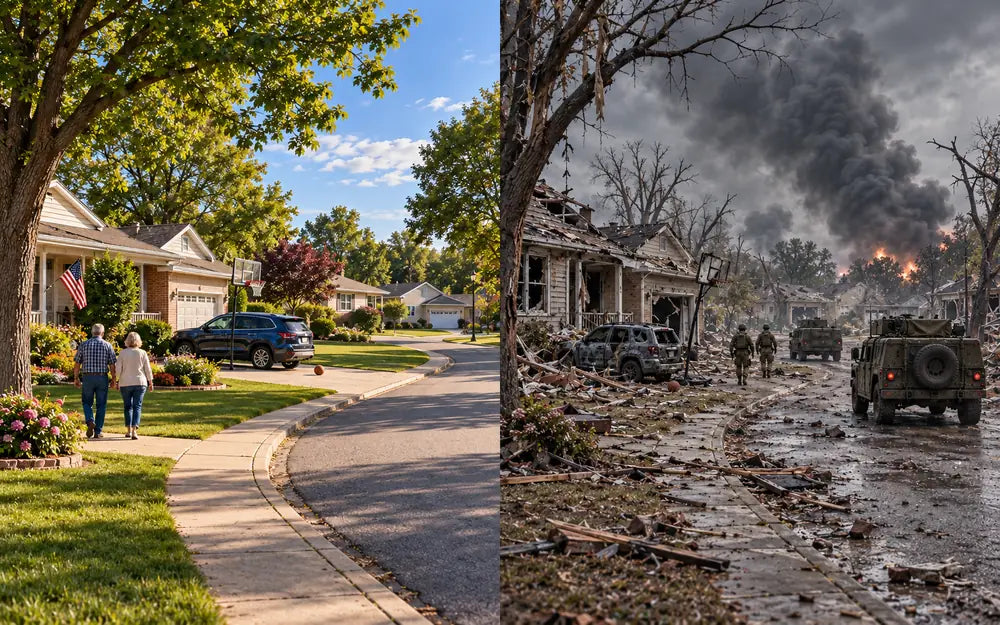
Look at the left side of that picture. A flag on the porch. A ball in the driveway. A couple out for their evening walk. That’s most of us. Now look at the right side. Same houses. Same street. After a war came home.
We’ll call the couple Bill and Peggy. They’re made up. But you probably know a Bill and Peggy. You might be one.
Seven months ago, on February 28, U.S. and Israeli strikes killed Iran’s Supreme Leader. Since then, the war has felt like something happening over there.
But wars don’t always stay where they start. This one could come home through the power grid, the fuel supply and the computers that run them.
Here are four signs it’s closer than Bill and Peggy think. Maybe closer than you think, too.
Sign #1 The peace deal collapsed. The newest offer was just rejected.

In June, Washington and Tehran signed a deal to start ending the war.
It lasted three weeks.
Last month, Iran offered a new truce. President Trump turned it down: “I reject their proposal.”
Days later, more oil tankers were hit in the Strait of Hormuz.
If you’ve been waiting for a peace deal to make this go away, it isn’t coming yet.
Sign #2 The FBI is on alert for sleeper cells. Here at home.
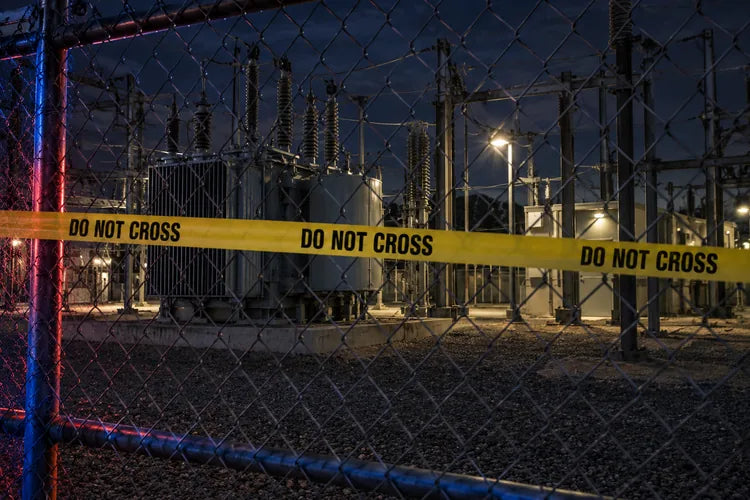
The night the war started, the head of the FBI put its counterterrorism teams on high alert.
In March, a federal alert went out to law enforcement. It flagged a new coded broadcast, likely from Iran. The alert warned it could be meant to:
“…activate or provide instructions to prepositioned sleeper assets operating outside the originating country.”
Federal alert to U.S. law enforcement, March 2026, as reported by ABC News
In plain English: a coded signal to wake up people who are already in place.
Last month, police in England arrested several men over a suspected plot against RAF Fairford. That’s the base American bombers fly from to strike Iran. British officials point to Iran. Iran denies it.
And in July, suspected Iran-linked hackers got into more than 30 water systems in Minnesota.
They don’t have to reach your town. They just have to reach your grid.
Sign #3 The U.S. military just pulled its bombers back home.
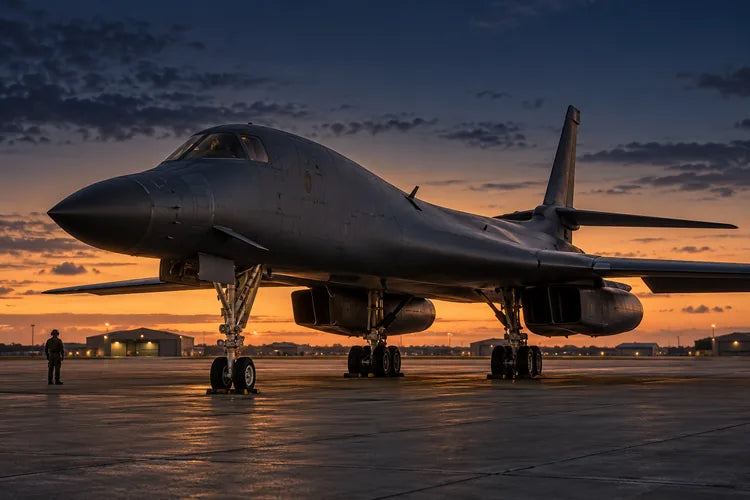
A week after those arrests, every U.S. bomber at that base flew home. The Pentagon confirmed it.
When the military moves its most valuable assets out of harm’s way, it’s fair to ask what you should be getting ready for.
Sign #4 Government officials have backup power. Most families don’t.
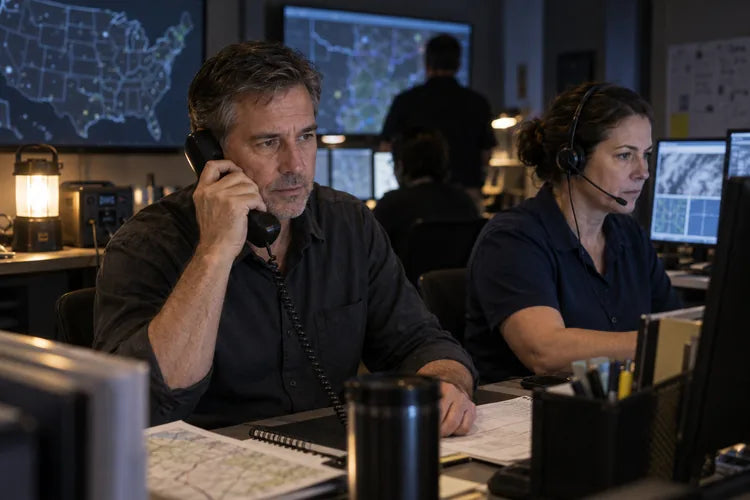
Hospitals must switch to emergency power within seconds of an outage.
Emergency command centers run on generators.
Officials even get their calls put first when the phone networks jam.
And the government’s own emergency checklist tells every family to keep backup power at home:
“Flashlight. Extra batteries. Battery-powered or hand crank radio. Cell phone with chargers and a backup battery.”
Items from Ready.gov’s basic disaster supplies kit
The people in charge planned for the power going out. Most families, like Bill and Peggy, are counting on it staying on.
What happens next No one knows exactly what will happen next. But we know what goes first.

Maybe the talks work. Maybe the war stays over there.
But if it does reach home, it won’t start with soldiers in the street. It will start with the power.
And when the power goes, everything that plugs into a wall goes with it.
The first 72 hours on Bill and Peggy’s street
Picture it.
-
Hour 0
The lights go out.
A cyberattack, a strike or a sleeper cell at a few substations cuts power across the region. On Bill and Peggy’s street, it happens in the middle of dinner.
-
Hour 4
The phones jam.
Everyone grabs a phone at once. Calls fail. Peggy’s text to their daughter just sits there, unsent.
-
Day 2
Fuel runs short.
The gas station can’t pump without power. The neighbor’s generator sputters out. Diesel hit a record $6.53 a gallon in September.
-
Day 3
The batteries die.
Phones, flashlights and the radio go dark. Bill and Peggy have water and canned food. They don’t have power, or any way to know how long this will last.
A hypothetical scenario, not a forecast. Bill and Peggy are made up. The diesel price is real: U.S. Energy Information Administration, via USAFacts.
The overlooked essential The one thing most people overlook during an emergency.
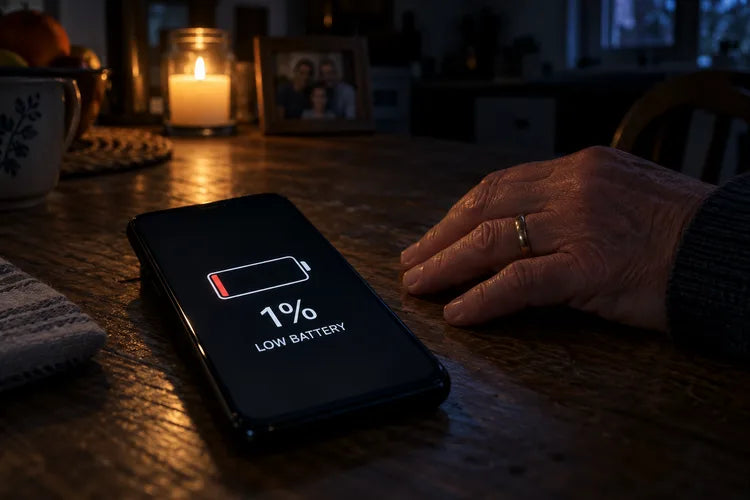
Bill and Peggy did a lot right. Water in the garage. Canned food in the pantry. A first-aid kit under the sink.
What they overlooked is what most families overlook.
Power.
Their phones. Their flashlight. The radio. The tablet the grandkids watch. Almost everything you’d reach for in the dark runs on a battery, and every one of those batteries needs a wall outlet to fill back up.
Lose the grid, and you lose all of it. A generator helps if you have fuel. But it can’t come inside the house, and it can’t come with you.
Power that doesn’t come from the grid Which is why we created the Fortisk Emergency Solar Power Bank.
You can’t control what happens in the Strait of Hormuz. You can’t control who gets into the grid.
But you can control whether your family has power when it goes down.
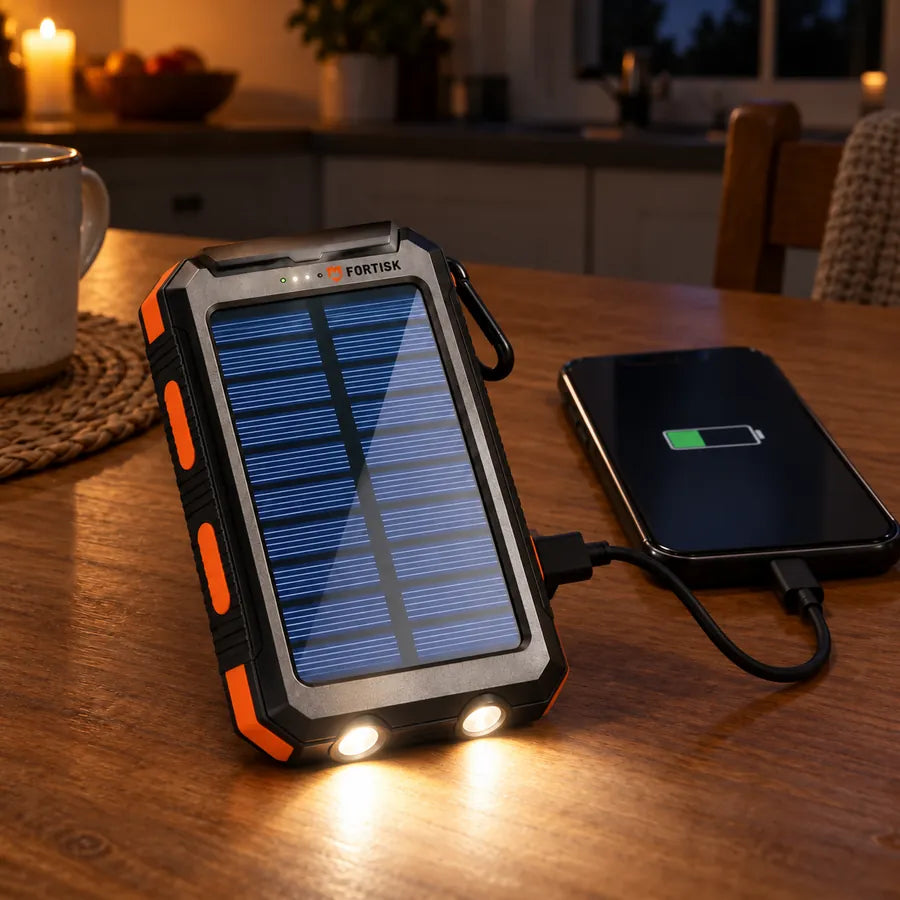
It’s backup power you can hold in one hand.
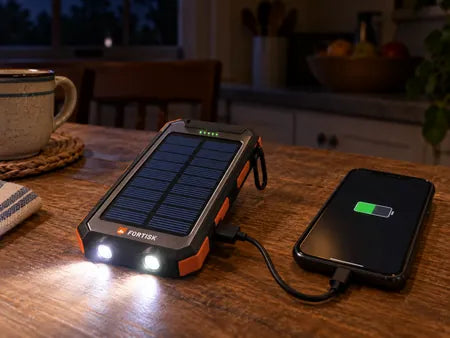
Charge it at the wall the day it arrives. When the grid goes down, it charges phones, tablets, radios and USB lights, [two] at a time. Its built-in flashlight lights the room.
When it runs low and there’s no working outlet anywhere, set it face-up in direct sun. The solar panel puts charge back, a little more every day.
No grid. No gas. No fuel truck. Just the sun.
Picture Bill and Peggy’s kitchen on Day 3 with one of these on the table. The flashlight on. The radio playing. Both phones charged.
We priced it so a family can keep one in every drawer, car and go-bag. Because backup power shouldn’t be something only officials have.
90-day money-back guarantee
How it works
-
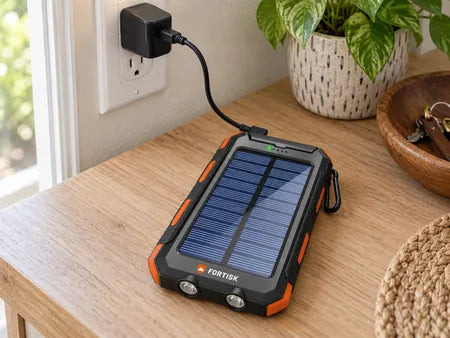
Charge it
Plug it in the day it arrives. Four lights show when it’s full.
-
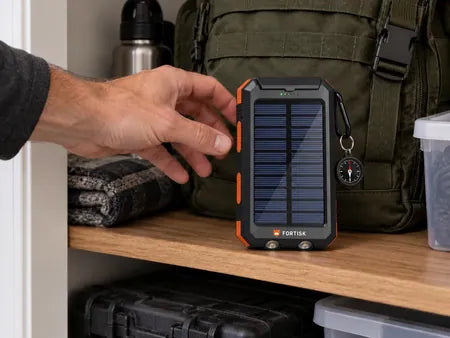
Pack it
Keep it in the kitchen drawer, the glovebox or a go-bag.
-
Power up
When the lights go out, plug in. In a long outage, set it in the sun.
How the usual backups compare
| Feature | Regular power bank | Car charger | Generator | Fortisk solar |
|---|---|---|---|---|
| Recharges with no grid power | No | Partly | Partly | Yes |
| Safe to use inside the house | Yes | No | No | Yes |
| Built-in flashlight | Partly | No | No | Yes |
| Keeps going when fuel runs short | Partly | No | No | Yes |
Recommended
One for the drawer. One for the car. One for the go-bag.
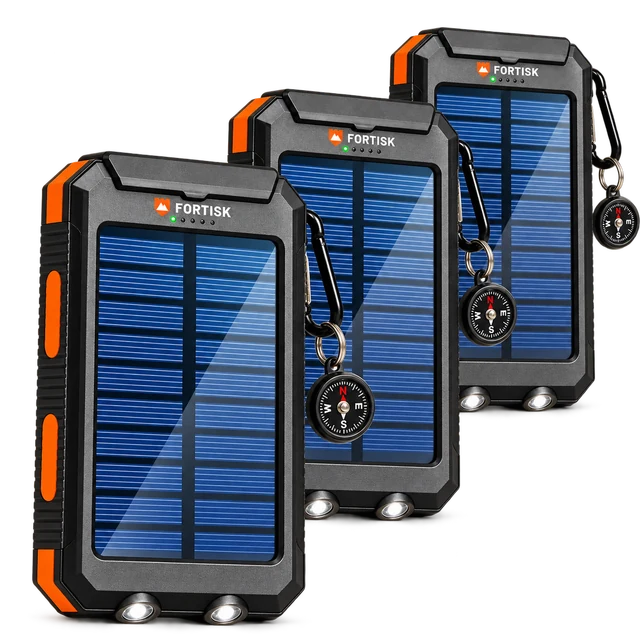
Fortisk Emergency Solar Power Bank · 3 Power Banks (2 + 1 Free)
- Backup power for phones, tablets, radios and lights
- About [3] phone charges in each
- Recharges in the sun when the grid is down
- Buy 2, get 1 free
$99.90 for 3 power banks
Crossed-out price is what one power bank costs on its own
Get 3 for the price of 2- 90-day money-back guarantee
- Free shipping
Before you decide Questions people ask before they buy.
Are you saying a war is coming here?
No one can tell you if or when. This page is about one thing you can control: whether your family has backup power if the grid goes down, for any reason.
What can it power?
Most small devices that charge from a USB cable: phones, tablets, e-readers, weather radios, USB flashlights and lanterns, and small USB fans. It won’t run anything that needs a wall outlet, like a refrigerator, a furnace, a space heater or medical equipment.
How many do I need?
One for every place you’d want backup power: the house, the car and a go-bag. The buy 2, get 1 free pack covers all three. For a bigger family, or to cover your parents too, the buy 3, get 2 free pack works out to $29.97 each.
The power is on tonight. Get your family’s backup handled now.
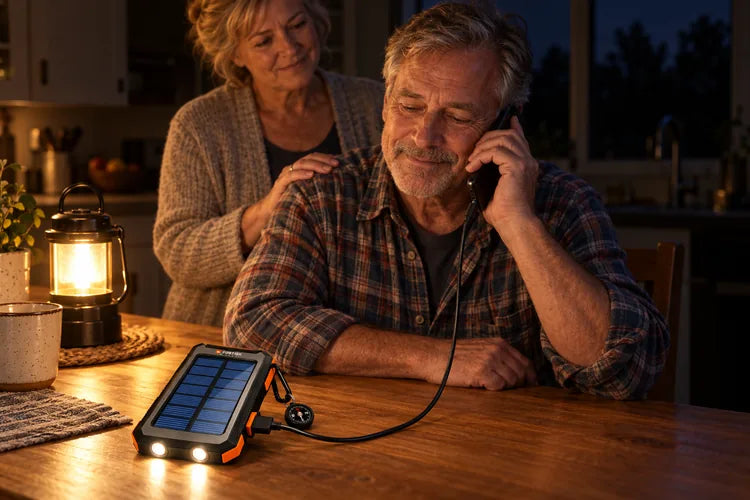
Tonight, your street probably looks like the left side of that picture. The lights are on. The phone works. Nobody can tell you if that will change, or when.
The people in charge aren’t waiting to find out. You don’t have to either.
When your power banks arrive, charge them at the wall. Put one in the kitchen drawer, one in the car and one in the go-bag.
Then, if the lights ever go out on your street, here’s how that night goes instead.
The flashlight clicks on. The radio finds the news. The phones stay charged. And when the network clears, your text goes through:
“We’re okay. We have power.”
90-day money-back guarantee · Free shipping
P.S. Officials have backup power. Your family has whatever you put in the drawer. Make it count.
Sources and notes
- ABC News, “Iran may be activating sleeper cells outside the country, alert says” (March 9, 2026), and Police1 (March 10, 2026): the federal alert about encrypted transmissions; the February 28 strike that killed Iran’s Supreme Leader.
- Fox News, “FBI steps up monitoring of potential sleeper cells after Iran strikes” (March 1, 2026): FBI Director Kash Patel put counterterrorism and intelligence teams on high alert.
- ABC News, “How the US-Iran ceasefire and MOU broke down — a timeline”: the June 17 memorandum and the ceasefire declared over in July.
- Al Jazeera, “‘Better deal’: What’s behind Trump’s rejection of Iran’s truce offer?” (September 27, 2026): “I reject their proposal.”
- CNBC, “More tankers struck in Gulf waters as Iran reiterates conditions” (October 4, 2026).
- ABC News and Defense News (October 5, 2026): all U.S. bombers deployed to RAF Fairford redeployed home after arrests over a suspected plot; British officials cite strong indications of Iranian involvement; Iran denies it. MigFlug (October 2026): the arrests came about a week earlier.
- TIME (August 2, 2026) and CBS News (August 1, 2026): more than 30 Minnesota water systems hit by suspected Iran-linked hackers.
- NFPA 99 and NFPA 110: hospital emergency power must be available within 10 seconds of an outage. CISA: Wireless Priority Service and GETS give authorized officials priority calling.
- Ready.gov, “Build A Kit”: basic disaster supplies kit, including a flashlight, extra batteries, a battery-powered or hand crank radio, and a cell phone with chargers and a backup battery.
- USAFacts, “Diesel prices rose 89% from January low to September record high” (September 29, 2026): $6.53 a gallon on September 21, 2026.
- FAA PackSafe, “Airline Passengers and Batteries”: power banks up to 100 Wh, carry-on only.
Bill and Peggy and the 72-hour scenario are fictional, and some claims are dramatized. The pictures are AI-generated illustrations. Product specs in [brackets] are targets to confirm with the supplier. None of the agencies, officials, companies, news outlets or reports above tested, recommended or endorsed this product.