
The war with Iran, seven months in
4 Signs the War With Iran Could Reach the United StatesAnd the Backup Government Officials Already Have That Most Families Don’t
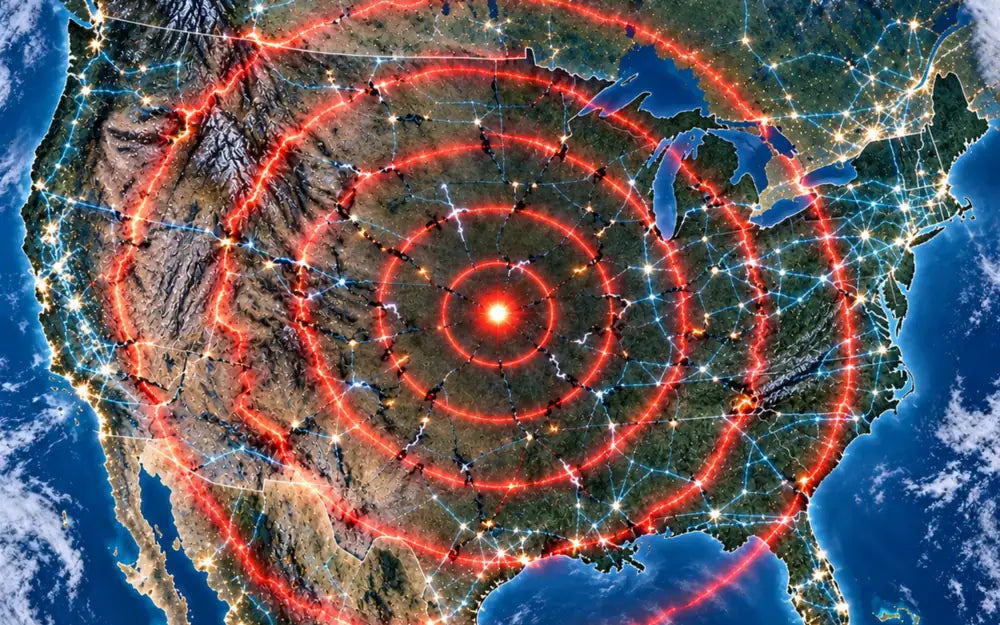
The peace deal collapsed. The FBI is on alert for sleeper cells. And U.S. bombers just came home from Britain after a suspected Iran-linked plot. Here are the four signs, what they could mean at home, and the one thing officials made sure they had.
It started on February 28, when U.S. and Israeli strikes killed Iran’s Supreme Leader. Seven months later, most Americans still think of it as something happening over there. Maps on the evening news. A number at the gas pump.
But modern wars don’t stay where they start. They come home through wires: the power grid, the fuel supply, the computers that run water plants, and the phone in your pocket.
Here are four signs it’s already closer than most families think. And the backup the people in charge have quietly put in place for themselves.
Sign #1 The peace deal collapsed. The newest offer was just rejected.
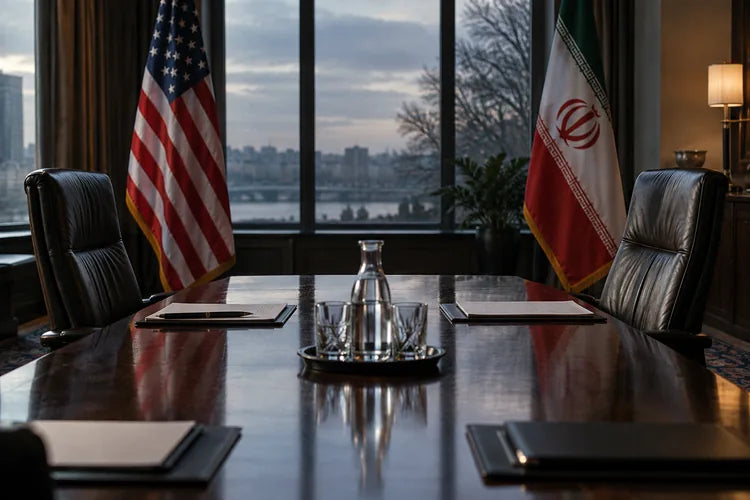
In June, Washington and Tehran signed a deal that was supposed to start ending the war. It held for three weeks.
In July, Iran hit three ships in the Strait of Hormuz. The President declared the ceasefire over, and the strikes started again.
Last month, Iran offered a new truce. On September 26, President Trump turned it down: “I reject their proposal.” Days later, another oil tanker was attacked in the strait, the channel about a fifth of the world’s oil moves through, and Iran repeated its terms for ending the war.
Wars rarely spread because of one surprise attack. They spread when the talking stops and every side digs in. Iran turned down American peace plans in March, April and May. Now Washington has turned down Iran’s.
Seven months in, nobody is signing anything.
Sign #2 The FBI is on alert for sleeper cells. Here at home.
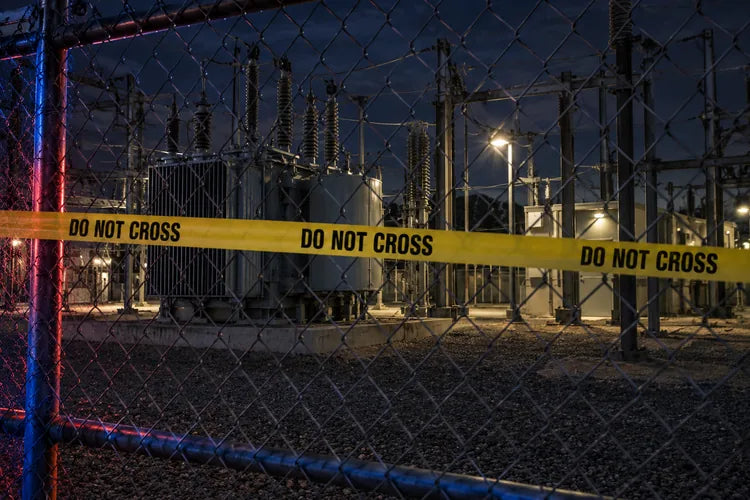
The night the war started, FBI Director Kash Patel put the Bureau’s counterterrorism and intelligence teams on high alert. Since then, agents have been watching for sleeper cells: people who live quiet, ordinary lives, sometimes for years, until they get the signal to act.
In March, a federal alert to law enforcement flagged a new encrypted broadcast, likely from Iran. The alert said it could be meant to:
“…activate or provide instructions to prepositioned sleeper assets operating outside the originating country.”
Federal alert to U.S. law enforcement, March 2026, as reported by ABC News
Last month, it stopped being a theory. In England, police arrested several men over a suspected plot against RAF Fairford, the base American bombers have been flying from to strike Iran. British officials say there are strong indications Iran was behind it. Iran denies it.
And some cells don’t need weapons at all. In July, suspected Iran-linked hackers got into more than 30 water systems in Minnesota. Operators had to run the plants by hand.
They don’t have to reach your town. They just have to reach your grid.
Sign #3 The U.S. military just pulled its bombers back home.
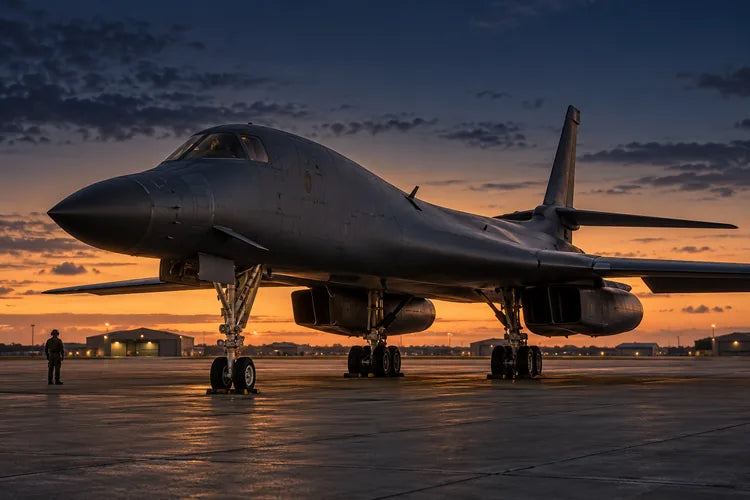
A week after those arrests, the Pentagon confirmed that every U.S. bomber deployed to RAF Fairford had flown home to the United States. President Trump said the men had planned “big damage.”
Militaries don’t pull their most valuable aircraft back for no reason. They do it when keeping them where they are gets too risky.
When the military starts moving its assets out of harm’s way, it’s worth asking what else it’s getting ready for.
Sign #4 Government officials have a backup plan for their phones. Most families don’t.
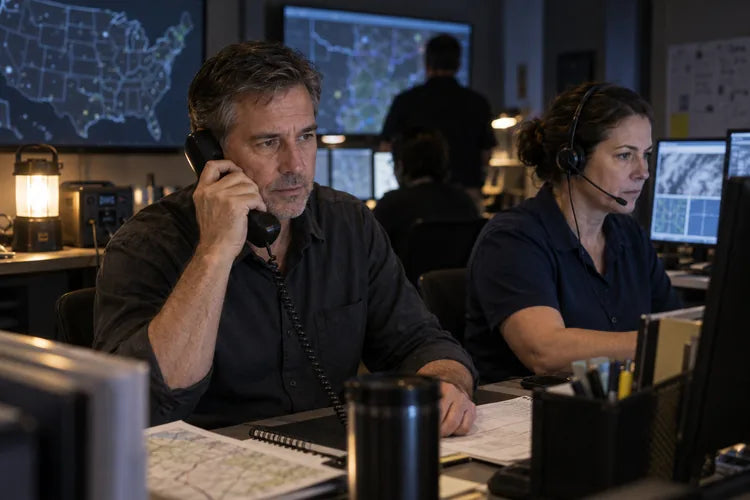
When phone networks jam in a national emergency, officials don’t wait in line. Federal programs like the Wireless Priority Service push their calls to the front of the network while everyone else keeps hitting redial.
Emergency command centers run on backup power, and many keep satellite phones within reach.
And the federal government’s own emergency checklist tells every family to keep one item most people never think about:
“Cell phone with chargers and a backup battery.”
Ready.gov, the federal government’s emergency supply checklist
What happens next No one knows exactly what will happen next. But we know what goes first.

Maybe the talks work this time. Maybe the war stays over there.
But if it does reach home, it won’t start with soldiers in the street. It will start with the lights.
First the power goes. Then the cell networks jam. Then your phone dies. Then the news stops.
That’s why people who plan for emergencies for a living all start in the same place: keep power for the things that keep you connected. Here’s how fast it can unravel.
The first 72 hours
A hypothetical scenario, built from how real grid and network failures tend to unfold.
-
Hour 0
The grid goes down.
A cyberattack, a strike or a sleeper cell at a few key substations knocks out power across a region. The lights go out at dinner.
-
Hour 4
The networks jam.
Cell towers switch to backup batteries. Everyone grabs their phone at once. Calls fail. Texts sit unsent.
-
Day 2
Fuel gets tight.
Gas pumps need power. Backup generators need diesel, and diesel just hit a record $6.53 a gallon in September.
-
Day 3
The phones go dark.
Batteries run out. Families in different towns can’t reach each other, and nobody knows how long it will last.
A hypothetical scenario for illustration, not a forecast. The diesel price is real: U.S. Energy Information Administration, via USAFacts.
By Day 3, the families who planned ahead are still talking to each other. Everyone else is staring at a dead phone, waiting for news that isn’t coming.
The overlooked essential The one thing most people overlook during an emergency.
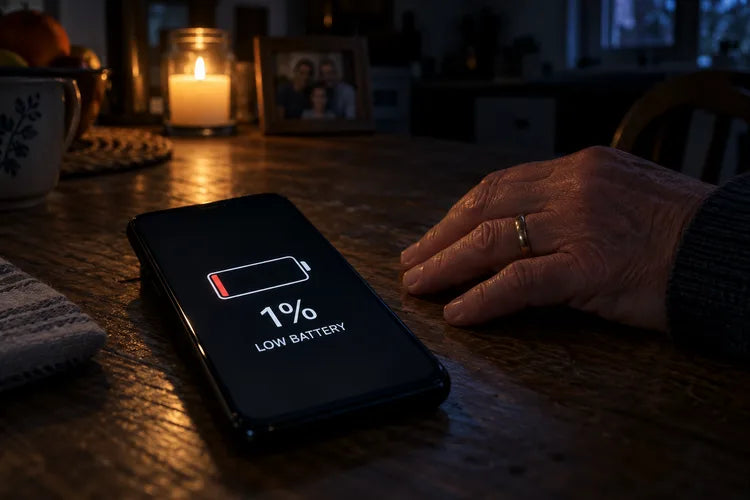
Plenty of people worry about a war. Far fewer get ready for one.
And the ones who do usually buy the same things: bottled water, canned food, a first-aid kit, a flashlight. Then they overlook the one thing that holds it all together.
It doesn’t matter what takes the power down. A missile. A hacker. A sleeper cell with a truck. The result is the same:
No power. No phone. No news. No way to reach the people you love.
Your phone is your flashlight, your map, your emergency alerts, your bank and the only number your kids know by heart. When the battery dies, all of that goes dark with it.
Glenn Hadley knows that better than most. He spent twenty-four years as an Army signal officer, keeping radios working where nothing else did. The week the war started, he set a power bank on every nightstand in the family and made each grandkid charge it in front of him. When they teased him, he told them the one rule he never broke in uniform:
“Nobody went out without spare batteries for the radio. Not ever. If you can’t talk, you can’t do anything.”
Glenn Hadley, retired Army signal officer (a fictional character)
Every serious emergency plan comes back to that rule, including the government’s own: keep backup power for your phone.
Power that doesn’t come from the grid Which is why we created the Fortisk Emergency Solar Power Bank.
You can’t control what happens in the Strait of Hormuz.
You can’t control who gets into the grid.
You can’t control how long the lights stay off.
But you can control whether your family’s phones stay on.
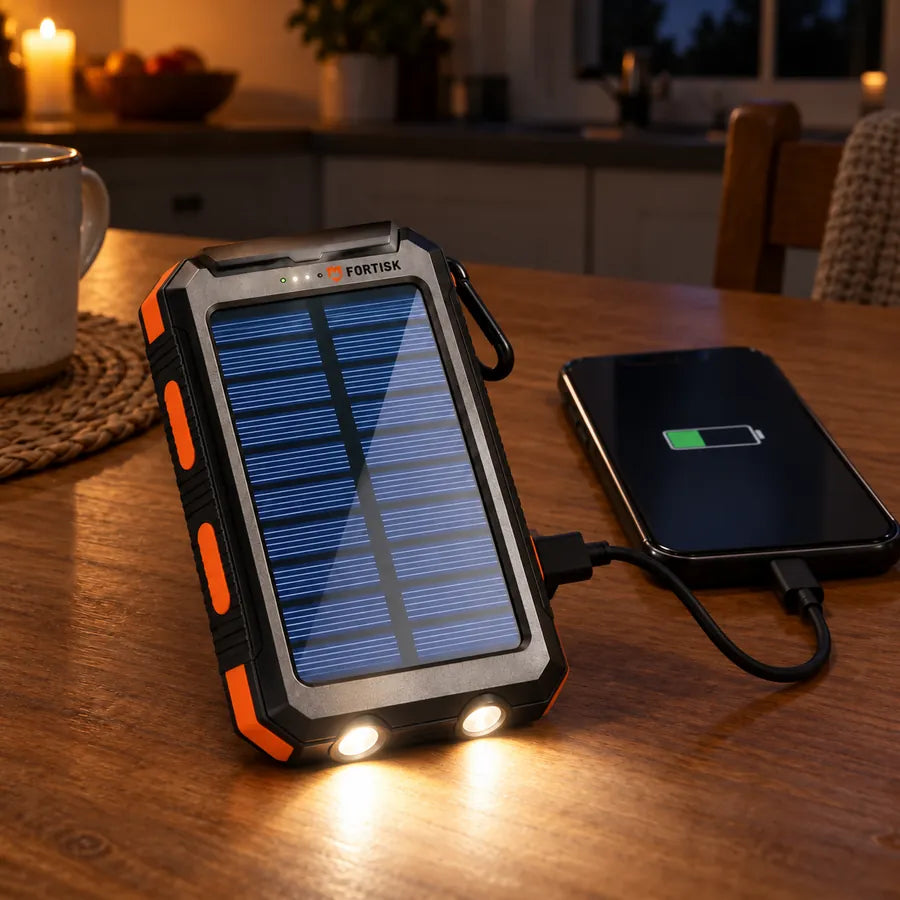
It’s a power bank built for the night the grid goes down, whatever takes it down.
Charge it from the wall the day it arrives. It holds [about 3] full phone charges and charges [2] phones at once. When the lights go out, plug in your phone, or switch on the flashlight. If the outage drags on, set it face-up in direct sun, and the solar panel adds charge back, a little more every day.
No grid. No gas. No fuel truck. Just the sun.
It weighs [about a pound] and clips to a bag. And we priced it so a family can keep one in every drawer, car and go-bag, not one for the whole house.
Because backup power shouldn’t be something only officials have.
90-day money-back guarantee
How it works
-
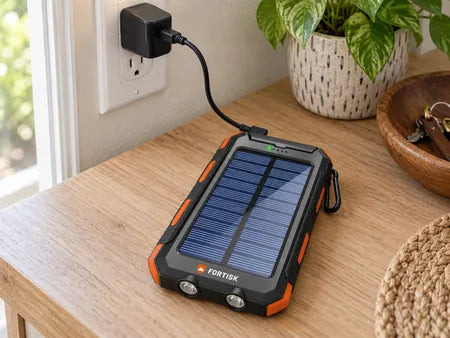
Charge it
Plug it in the day it arrives. Four lights show when it’s full.
-
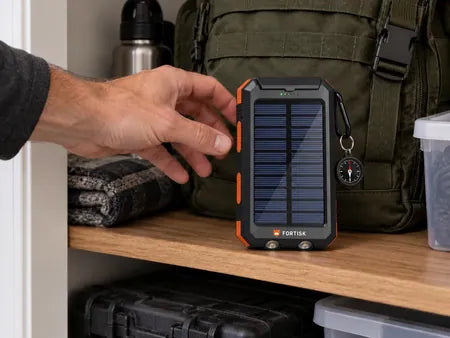
Pack it
Keep it in the kitchen drawer, the glovebox or a go-bag.
-
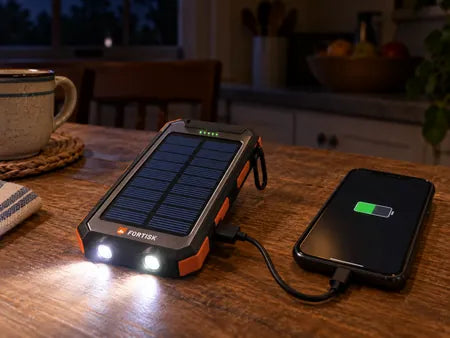
Plug in
When the lights go out, charge your phone. In a long outage, set it in direct sun.
How the usual backups compare
| Feature | Regular power bank | Car charger | Generator | Fortisk solar |
|---|---|---|---|---|
| Recharges with no grid power | No | Partly | Partly | Yes |
| Safe to use inside the house | Yes | No | No | Yes |
| Built-in flashlight | Partly | No | No | Yes |
| Keeps going when fuel runs short | Partly | No | No | Yes |
Before you buy any power bank Not every emergency power bank is what it claims. Here’s how to check.
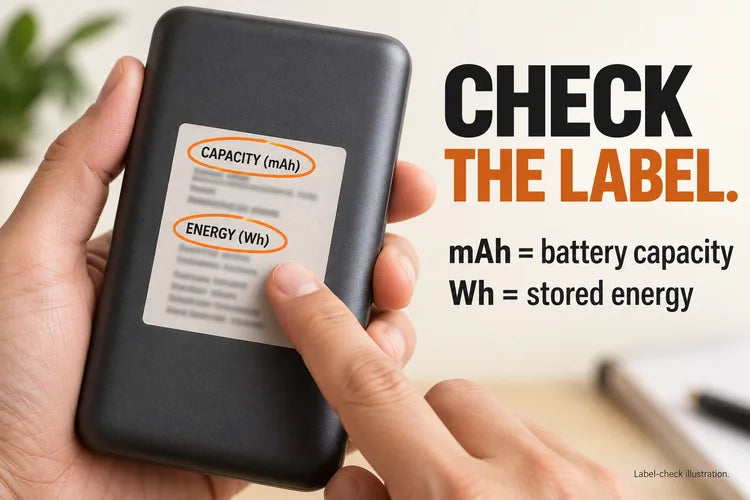
When war news breaks, cheap “emergency” power banks flood the internet. Some are fine. Some aren’t. One listing we checked gave the same power bank’s capacity as 20,000 mAh in one place and 37 Wh in another. Both can’t be true. Another promised “infinite power with solar.” No panel that size can deliver that.
A power bank that holds half what it claims looks exactly like one that doesn’t, until the night you need it. Check these five things first. Ours included.
Recommended
One for the drawer. One for the car. One for the go-bag.
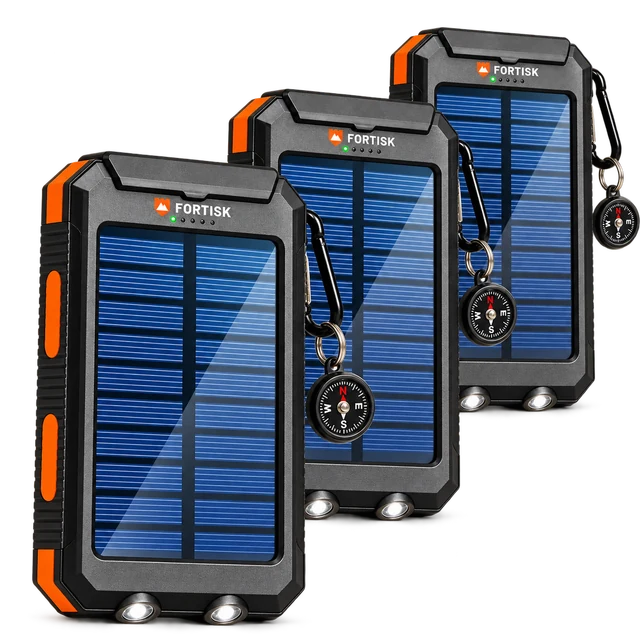
Fortisk Emergency Solar Power Bank · 3 Power Banks (2 + 1 Free)
- About [3] full phone charges in each
- Recharges in the sun when the grid is down
- Flashlight with SOS mode
- Buy 2, get 1 free
$99.90 for 3 power banks
Crossed-out price is what one power bank costs on its own
Get 3 for the price of 2- 90-day money-back guarantee
- Free shipping
Before you decide Questions people ask before they buy.
Are you saying a war is coming here?
No one can tell you if or when. This page is about one thing you can control: whether your family’s phones stay on if the grid goes down, for any reason.
How many do I need?
One for every phone you’d want to keep charged. For most couples, the buy 2, get 1 free pack covers the house, the car and a go-bag. For a family of four, or to cover your parents too, the buy 3, get 2 free pack works out to $29.97 each.
Did the government recommend this product?
No. The government’s checklist recommends a backup battery for your phone, but no agency tested, recommended or endorsed this or any brand.
The phones work tonight. Get your family’s backup handled now.
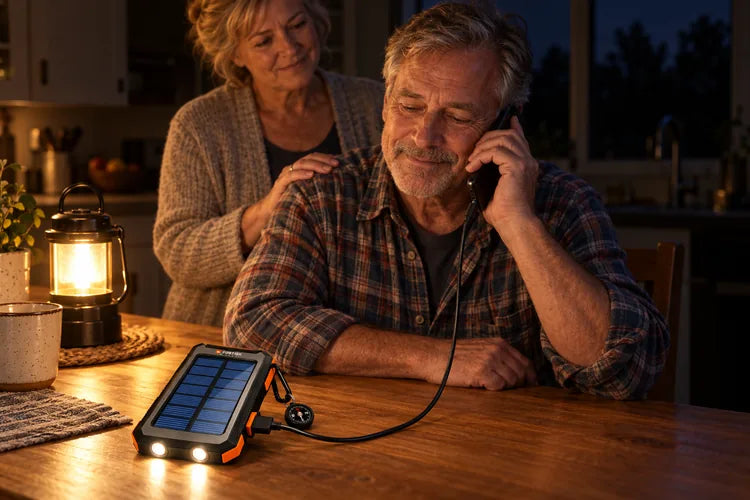
Nobody can tell you if this war will reach the grid here, or when. The people in charge aren’t waiting to find out. You don’t have to either.
When your power bank arrives, charge it, charge your phone from it once, and put it in the drawer where you keep the flashlights.
So if the lights ever go out and your phone rings in the dark, you’ll be able to answer it:
“It’s me. We’re okay.”
90-day money-back guarantee · Free shipping
P.S. Officials have priority phone lines and backup power. Your family has whatever you put in the drawer. Make it count.
P.P.S. Try your phone’s satellite demo tonight, then look at your battery. If the grid went down right now, how long would it last?
Sources and notes
- ABC News, “Iran may be activating sleeper cells outside the country, alert says” (March 9, 2026), and Police1 (March 10, 2026): the federal alert about encrypted transmissions; the February 28 strike that killed Iran’s Supreme Leader.
- Fox News, “FBI steps up monitoring of potential sleeper cells after Iran strikes” (March 1, 2026): FBI Director Kash Patel put counterterrorism and intelligence teams on high alert.
- Bloomberg (March 25, 2026), Iran International (April 6, 2026) and VOA via GlobalSecurity.org (May 11, 2026): Iran rejects U.S. peace and ceasefire proposals.
- ABC News, “How the US-Iran ceasefire and MOU broke down — a timeline”: the June 17 memorandum, Iran’s July 7 strikes on three vessels and the ceasefire declared over.
- Al Jazeera, “‘Better deal’: What’s behind Trump’s rejection of Iran’s truce offer?” (September 27, 2026): “I reject their proposal.”
- CNBC, “More tankers struck in Gulf waters as Iran reiterates conditions” (October 4, 2026).
- U.S. Energy Information Administration, “Strait of Hormuz is chokepoint for 20% of world’s oil.”
- ABC News and Defense News (October 5, 2026): all U.S. bombers deployed to RAF Fairford redeployed home after arrests over a suspected plot; British officials cite strong indications of Iranian involvement; Iran denies it. MigFlug (October 2026): the arrests came about a week earlier.
- TIME (August 2, 2026) and CBS News (August 1, 2026): more than 30 Minnesota water systems hit; operators switched to manual.
- USAFacts, “Diesel prices rose 89% from January low to September record high” (September 29, 2026): $6.53 a gallon on September 21, 2026.
- CISA, Wireless Priority Service: priority calling for authorized national security and emergency officials on cellular networks.
- Ready.gov, “Build A Kit”: basic disaster supplies kit, including a cell phone with chargers and a backup battery.
- CBS News, “iPhone users can send texts via satellite when cell service is down” (October 9, 2024); MacRumors, how to try the Emergency SOS via Satellite demo.
- FAA PackSafe, “Airline Passengers and Batteries”: power banks up to 100 Wh, carry-on only.
Glenn Hadley, his quote and the 72-hour scenario are fictional, and some claims are dramatized. Product specs in [brackets] are targets to confirm with the supplier. None of the agencies, officials, companies, news outlets or reports above tested, recommended or endorsed this product.